·
🇳🇱
Netherlands live webcams
164 cams
Top categories in Netherlands
Top cameras in Netherlands


Popular cameras
 Live
LiveAXIS Q1808-LE Bullet Camera
NL
 Live
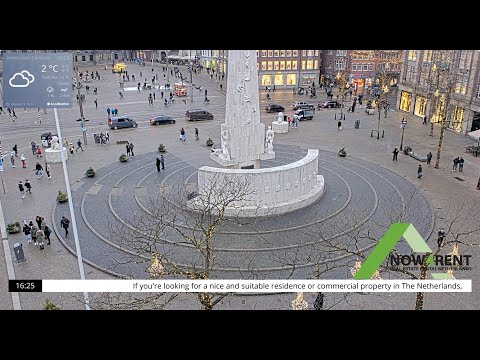
LiveAmsterdam De Dam, Pan Tilt Zoom Camera
NL
 Live
Livelive camera Vlieland.
NL
 Live
LiveSnowWorld Zoetermeer - Piste 1
NL
 Live
LiveSpoorzicht met Mo - Railcam Amersfoort
NL
 Live
Live🏻 Live Railcam Zandvoort 2 (Fixed) 🏻
NL
 Live
Livelive camera. (1440p)
NL
 Live
Livesjoerd-ameland.nl/webcam, live camera Ameland.
NL
 Live
LiveBakelgeert eo - nieuwbouw 31 sociale huurwoningen
NL
 Live
LiveAmsterdam De Vijf Bruggen camera 1
NL
 Live
LiveStrukton PACS C11 Camera 2
NL
 Live
LivePan Tilt Zoom camera.
NL
 Live
LiveRenesse aan Zee
NL
 Live
LiveStrukton PACS C11 Camera 1
NL
About webcams in Netherlands
The Netherlands has a particular kind of webcam coverage: it is less about mountain passes and more about water and infrastructure. The most distinctive group is the railway cameras. The national rail infrastructure manager operates a network of cameras aimed at level crossings and station platforms, intended for monitoring and safety. What that means for a viewer is a chance to watch intercity trains and freight haulage roll by through flat, open countryside, or pull in and out of busy stations. Coverage is spread across the country, but the densest clusters are around the Randstad, where the rail network is busiest, and along the main freight corridors to Germany and Belgium. The second major group is the coast. The Dutch coast on the North Sea is lined with beach cameras, many run by municipalities or local tourist boards, pointing at the dunes, the beach and the surf line. These are practical tools, used by locals to check the wind and the waves before heading out, and by others just to see the wide sky and the sea. In summer they show crowded sands; in winter, stormy seas and occasional snow. Alongside these are the river and lake cameras, operated by water authorities and regional governments to monitor water levels on the big rivers like the Rhine and the Meuse, and on the IJsselmeer. These often double as views of the landscape, showing river traffic, bridges and locks. Finally, there are the wildlife and zoo cameras, which are popular with a different audience. Dutch zoos and nature reserves maintain a handful of live streams aimed at nesting birds or grazing animals. They are less about geography and more about watching life go on. Taken together, Dutch cams are flat and close to sea level, but they capture a country that is always managing water, moving trains and going to the beach.